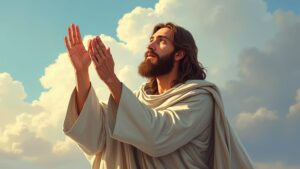
Spirit Empowered Witness

Empowerment is not simply helpful for the Church—it is vital if we are going to move forward. But what does it mean to be Spirit-Empowered?

The evangelistic side of the Church is dependent upon the Spirit-empowered side. The primary power source of the Church is the Holy Spirit. Jesus told His disciples to wait until they were “clothed with power from on high” (Luke 24:49). Then, in Acts 1:8, He promised, “When the Holy Spirit comes upon you, you will be filled with power, and you will be witnesses for me… to the ends of the earth.”

The chief role of the Holy Spirit is to make us more like Christ—both in character and in power. He develops the fruit of the Spirit within us while also releasing spiritual gifts through us. Why? So that we can become the hands and feet of Jesus and help bring people into God’s Kingdom.

As Oral Roberts said, “It’s the job of the Holy Spirit to bring back to earth the full, unlimited power of Jesus.”

So how do we become effective witnesses?

1. Pray for others.
Pray for opportunities and wisdom. Salvation is the heart of God, and when we pray for those who do not yet know Christ, our hearts begin to align with His. Compassion is the root of ministry. Jesus saw the crowds, had compassion on them, and ministered to their needs (Matthew 14:14). God challenged me in Armenia to pray for the people we were ministering to—not simply for the speaking opportunities.

2. Create opportunities to share your faith.
People listen to those they like, value, and trust. Value people. The ability to influence is the natural byproduct of encouragement. The length and breadth of our influence on others is directly related to the depth of our concern for them. Walk in humility and integrity. Ask questions. Listen to understand rather than simply waiting to respond. Trust builds relationships, and relationships create opportunities for influence.

3. Be led by the Spirit.
Only the Holy Spirit knows what is happening in someone’s heart. He knows what to say, when to say it, and how to say it.

4. Be brave.
Step out in faith. The Holy Spirit is with you, and God wants you to succeed more than you do. He will back you up.

5. Share Jesus.
When the Spirit empowers you, don’t keep the message to yourself. Open your mouth, tell your story, and point people to Jesus.

Paul reminds us that God “through us spreads the fragrance of the knowledge of him everywhere” (2 Corinthians 2:14).

We are Spirit-empowered witnesses, called to carry the character, compassion, and power of Jesus everywhere we go.


The God Who Comes Down: The Heart of the Gospel Is Divine Intervention

Every religion wrestles with the same question: How can humanity reach God?

Moreover, the ancient Norse, Greek, and Roman gods were distant, unpredictable, and often indifferent to human suffering. Additionally, People sought to appease them through sacrifices, rituals, and heroic deeds, hoping to gain a measure of favor. As a result, the burden was always on humanity to climb upward.

The gospel turns that idea upside down.

On the other hand, the heart of the gospel is not humanity reaching for God—it is God reaching for humanity.

Scripture declares that our own righteousness is “like filthy rags” (Isaiah 64:6). We cannot earn God’s presence, deserve His favor, or work our way into heaven. Left to ourselves, we fall short.

But God refused to leave us there.

When Israel groaned under the oppression of Egypt, God didn’t simply observe from heaven. He intervened.

“I have surely seen the affliction of my people… I have heard their cry… I know their sufferings, and I have come down to deliver them…” (Exodus 3:7–8).

Those words reveal the very heart of God. He sees. He hears. He knows. And then He comes down.

That same heart is perfectly displayed in Jesus Christ. Jesus declared, “The Son of Man came to seek and to save the lost.” He is the Shepherd who leaves the ninety-nine to rescue the one who has wandered away. Salvation begins with God’s pursuit, not ours.

The gospel is the greatest act of divine intervention the world has ever known.

And God’s intervention doesn’t stop at forgiveness. He desires to step into every area of our lives—with His grace for our sin, healing for our brokenness, peace for our anxiety, joy for our sorrow, and hope for our future.

You don’t have to climb your way to God.

The good news is that God has already come down to you.

That is the heart of the gospel. That is divine intervention.


Freedom Begins with God

Freedom Begins with God

As we celebrate Independence Day, many of us will enjoy fireworks, family gatherings, and patriotic traditions. But the Fourth of July is also an opportunity to reflect on the foundation upon which our nation was built. While the Declaration of Independence is not a Christian document or a substitute for Scripture, it contains truths that are deeply consistent with a biblical worldview.

The Declaration mentions God four times, referring to Him as “Nature’s God,” “Creator,” “Supreme Judge of the world,” and “Divine Providence.” These references remind us that America’s founders understood there is a higher authority than any earthly government.

One of the Declaration’s most memorable statements declares that “all men are created equal” and are “endowed by their Creator with certain unalienable Rights.” This echoes the truth found in Genesis 1:26–27: every person is created in the image of God. Our worth is not determined by our accomplishments, possessions, or position in society. Every human life has value because every person bears the Creator’s image.

The Declaration also speaks of “the Laws of Nature and of Nature’s God,” recognizing that God has established a moral order in His creation. The Apostle Paul wrote that God’s law is written on the human heart (Romans 2:14–15), while Psalm 19 proclaims that the heavens declare His glory. God’s truth is not merely a matter of opinion—it is woven into His creation.

Perhaps the most well-known phrase in the document is “Life, Liberty and the pursuit of Happiness.” As believers, we recognize that true life is found in Christ, true liberty comes through the freedom He provides from sin, and lasting joy is discovered in walking with Him. These blessings are gifts from God, not guarantees from government.

Near its conclusion, the Declaration appeals to the “Supreme Judge of the world” and expresses “a firm reliance on the protection of Divine Providence.” Those words are a humble acknowledgment that every nation ultimately depends on God’s wisdom, justice, and care.

As Christians, we are grateful for the freedoms we enjoy. Still, our greatest citizenship is in the Kingdom of God (Philippians 3:20). Earthly nations rise and fall, yet Christ’s Kingdom endures forever. This Independence Day, let us thank God for the blessings of our country, pray faithfully for our leaders, and remember that true freedom is found not merely in political liberty, but in the saving grace of Jesus Christ.

“So if the Son sets you free, you will be free indeed.” — John 8:36


Understanding Pride

The month of June is upon us, which is commonly, albeit less so these days, celebrated as Pride Month. Obviously, the central idea is that people ought to celebrate the LGBTQIA+ lifestyle.  This post will help to clarify what the Bible says about pride. It’s not intended to be judgmental, but for Christians, we ought to understand pride not based on our own thoughts, feelings, worldly opinions, or media bias but on the living Word of God.

Let’s start first with the definition of pride to set the stage: a feeling of deep pleasure or satisfaction derived from one’s own achievements, the achievements of those with whom one is closely associated, or from qualities or possessions that are widely admired.

Look at the key phrase there, “One’s own achievements.” Pride is rooted in what you can do, what you are, what you achieved. Pride glorifies yourself. It is a focus inward and not outward. Can a person be proud of their kids, team, coworkers, or country? I beleive their are allowances for that, as it is not self-focused but focused on others or on something higher than yourself. Even then, this type of pride has a slippery slope. Pride has a tendency to contract back into itself, promoting yourself. Yes, promoting yourself and denying the need for God or even others. Now, I promised Scripture, so enough of my conjecture; let’s turn now to the infallible Word for light and truth on the matter.

The Godly wisdom of Solomon teaches us, Proverbs 16:18 ESV: “Pride goes before destruction, and a haughty spirit before a fall.” And Proverbs 18:12 ESV: “Before destruction a man’s heart is haughty, but humility comes before honor.” We can begin to see a pattern here that pride or the glorification of self is a slope downward to destruction and disgrace. James 4:6 ESV-“But he gives more grace. Therefore it says, “God opposes the proud but gives grace to the humble.” This scripture can not get any clearer; God is not neutral to pride but is in direct opposition to it. 

The book of Psalm gets to the heart of the issue of pride: “Psalm 10:4 ESV: “In the pride of his face the wicked does not seek him; all his thoughts are, “There is no God.” The core of pride is a belief that there is no God. If there is no God, then the next conceivable step in that process is that, in fact, “I am God”. The central philosophy of Pride is, “God made a mistake; I know better than God. I can decide better than God.”

The Bible shares a story of someone who felt these feelings and decided to glorify themselves over God. The Prophet Isaiah in chapter 14 describes this account:

“How you are fallen from heaven,
    O Day Star, son of Dawn!
How you are cut down to the ground,
    you who laid the nations low!

13 You said in your heart,
    ‘I will ascend to heaven;
above the stars of God
    I will set my throne on high;
I will sit on the mount of assembly
    in the far reaches of the north;[c]

14 I will ascend above the heights of the clouds;
    I will make myself like the Most High.’

15 But you are brought down to Sheol,
    to the far reaches of the pit.

What can I do about pride? The good news is that there is a solution to Pride, which is the humble sacrifice of Jesus. Jesus still forgives sins. The grace that you don’t deserve has power to reconnect you to God when you are repentant and turn from your pride. The cure to pride is to recognize that God is higher than yourself, your intellect, your willpower, and your ability. Turn from your pride and turn unto Jesus and make Him Lord of your life today.


The Names of God Reveal the Character of God

 
Names matter. In Scripture, the names of God are not just titles—they reveal His nature, His promises, and how He relates to us. To know His name is to know His character. And when we understand who He is, our faith has something solid to stand on.

Here are five powerful Hebrew names of God and why they matter:

1. Elohim – The Creator, All-Powerful One
“Elohim” is the first name used for God in the Bible (Genesis 1:1). It speaks of His strength, authority, and creative power. He is the One who spoke the universe into existence. When life feels chaotic, remembering Elohim grounds us—He is powerful enough to create, and powerful enough to sustain you.

2. Yahweh (YHWH) – The Great “I Am.”
This is God’s personal, covenant name revealed to Moses (Exodus 3:14). It means “I Am Who I Am.” He is eternal, self-existent, and unchanging. Yahweh isn’t distant—He is present. We need to know this name because it reminds us God is not limited by time or circumstance.

3. Jehovah Jireh – The Lord Will Provide
Found in Genesis 22, this name reveals God as our provider. Abraham declared it when God provided a ram in place of Isaac. God doesn’t just see your need—He meets it. Knowing Him as Jireh builds trust when provision seems uncertain.

4. Jehovah Rapha – The Lord Who Heals
In Exodus 15:26, God reveals Himself as healer. This includes physical, emotional, and spiritual healing. His nature is restoration. When brokenness shows up in life, this name reminds us that healing is part of who He is.

5. Jehovah Shalom – The Lord Is Peace
In Judges 6:24, Gideon calls God “Shalom.” This isn’t just the absence of conflict—it’s wholeness, completeness, and rest. In a restless world, God’s peace anchors the soul.

Why These Names Matter
God’s names are not abstract ideas—they are promises. His identity is tied to His actions. When you call on His name, you are calling on His character. And His character never fails.

To know His name is to trust Him more deeply.


What is the Significance of Easter?


You work hard. You are raising a family. You try to spend quality time with your spouse. You see the calendars or road signs or church signs that Easter is on Sunday. You might even have heard the announcements from the White House that President Donald Trump gave on Easter. You might be thinking, “Who cares? What use is Easter to me, what significance does it have in my life?” You can get behind Independence Day as you are patriotic. You can get behind Thanksgiving and Christmas because they’re so huge in American society, and they keep family in the forefront. BUT what of Easter? Sure, the bunnies are cute, I mean, who doesn’t love bunnies? The egg hunts are fun, and the kids get some candy. It’s Spring, so yeah, spring is nice, and it means new life and all. What is the significance of Easter?
 
Easter is about hope. Not just fanciful hope you might find in a Disney movie like, “When you wish upon a star…” No, the hope of Easter is grounded in reality, not fantasy. You see, God, not like Zeus, Thor, Buddha, Allah, or a myriad of others who are dead, decided to intervene on behalf of mankind. Some of you just said, “This sounds like a fairy tale.” Just bear with me. You see, in all other religions, mankind must work, sacrifice, strive, and do good works to reach God or reach enlightenment or Heaven or some such thing. Don’t believe me? Ask a follower of that religion what they have to do. In Christianity, God sacrificed, worked, and fought on behalf of mankind. 
 
Understand that the state of mankind was lost due to our sin. Sin is missing the mark that is set via the commands of God. Sin left unchecked will ruin your life-don’t believe me just look around at the sad sate of the world. The problems of the world are not going to be found in another Government program or the next latest greatest politician. You see the problems of the world are not externally related but start as an internal heart problem. 
 
Ultimately the payment or the natural results of sin will be death and eternal separation from God our Father. However on Easter Jesus the son of God was nailed to a cross and He died for all of us, forever taking the punishment of sin on Himself. On Easter Sunday He rose from the grave forever defeating the power of sin, death, Hell and the grave!
 
Go ahead and get your hope up this Easter. Jesus offers hope, peace, joy and a brand new life ready for those who repent of their sin and put their faith in Him. Easter might just be the most significant day of all!


Spirit, Soul and Body

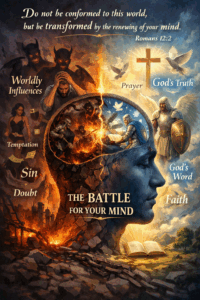
Romans 12:2 calls believers to a life of transformation: “Do not be conformed to this world, but be transformed by the renewing of your mind.” This verse reveals a powerful truth—your mind is the battleground where your spiritual life is won or lost.

Every believer lives with two competing influences: the flesh and the spirit. The carnal nature gravitates toward sin—selfishness, lust, pride, bitterness, and disobedience. It seeks immediate gratification and resists God’s will. On the other hand, your spirit, made new through Christ Jesus, desires righteousness, peace, and obedience. It is aligned with God, but it does not automatically dominate your life.

This is where the mind becomes crucial. Your thoughts, will, and emotions sit between these two forces. Whichever influence shapes your thinking will ultimately guide your actions. If your mind is filled with worldly patterns, the flesh will take control. But if your mind is continually renewed by the Word of God, your spirit gains authority.

The Word of God acts as a cleanser and a compass. It corrects wrong thinking, strengthens truth, and aligns your perspective with God’s will. As you meditate on Scripture, your desires begin to change. What once appealed to your flesh loses its grip, and what pleases God becomes your priority.

A renewed mind tips the scales. It empowers the new creation within you to lead your life. Instead of reacting out of old habits, you respond with wisdom, patience, and love. Transformation is not instant—it is a daily process of choosing God’s truth over worldly influence.

When you commit to renewing your mind, you are choosing to let your spirit lead. And in doing so, you step into the life God designed for you—one marked by victory, clarity, and purpose.


Living in Victory


The book of Ephesians is one of Scripture’s clearest roadmaps for living in the victory Christ has already secured for us. Paul doesn’t just tell believers what to do—he anchors everything in the unshakable reality of who we are in Him. These “in Him,” “in Christ,” and “in the Beloved” statements (woven all throughout chapters 1–3) reveal the spiritual position from which victorious living flows. We are chosen in Him, redeemed in Him, sealed in Him, raised with Him, and seated with Him. Before Paul ever discusses behavior, he establishes identity. Victory begins not with striving, but with knowing.

From the opening verses, Paul pours out a cascade of spiritual blessings that belong to every believer: adoption, redemption, forgiveness, grace, purpose, inheritance, and the Holy Spirit as our guarantee. These blessings are not future hopes—they are present realities. When believers grasp what has already been given to them, confidence rises, fear loses its voice, and spiritual battle takes on an entirely new perspective.

In the center of the letter stands one of Paul’s most powerful prayers (Ephesians 3:14-21). Here,he asks that we would know the love of Christ so deeply that we are “filled with all the fullness of God.” This is the heart of victorious living: not behavior modification, but Spirit-empowered transformation through the love of Christ. To be filled with God’s fullness is to live beyond our own strength. It is to love, forgive, serve, and walk in purity with a power not our own.

Chapters 4 through 6 turn this identity into daily practice. Paul addresses unity, maturity, purity, speech, forgiveness, and Spirit-led living. He gives specific instruction to marriages, families, and workplaces—showing that victory in Christ is meant to be lived out in the most ordinary, relational parts of life. Paul’s call to submit to one another, love sacrificially, honor consistently, and serve wholeheartedly reveals that spiritual victory is deeply practical.

And then comes the capstone: the armor of God (Ephesians 6:10–18). Everything Paul has taught leads to this final reality—we are in a spiritual battle, but we are not unarmed. We stand firm by putting on truth, righteousness, peace, faith, salvation, and the Word of God. These are not tools we manufacture; they are the very gifts Christ has given us “in Him.”

Ephesians shows us that victory is not something we earn. It is something we embrace—fully, confidently, and daily—because Christ has already won it for us.


God’s Unchanging Will to Heal

God’s heart toward His people has always been one of love and compassion. Throughout Scripture, we see that healing is not merely a historical event but a continual expression of His nature. Healing is not something we have to convince God to do; it flows naturally from who He is—our loving Father.

The Bible declares, “Bless the Lord, O my soul… who forgives all your iniquity, who heals all your diseases” (Psalm 103:2–3, ESV). Healing is part of the same covenant promise as forgiveness. God’s will to heal reflects His desire to restore what sin and brokenness have damaged.

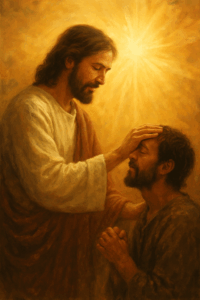
Jesus revealed the Father’s heart during His earthly ministry. He went about “teaching…preaching the gospel of the kingdom and healing every disease and every affliction among the people” (Matthew 4:23, ESV). Jesus never turned away the sick or afflicted. His actions were not random miracles but demonstrations of God’s will for humanity—restoration and wholeness.

Hebrews 13:8 reminds us: “Jesus Christ is the same yesterday and today and forever” (ESV). The One who reached out to the leper, who gave sight to the blind, and who raised the lame to walk has not changed. His love and power remain constant.

If it was His will to heal then, it is His will to heal now. We can approach God with faith and confidence, knowing that His heart is to bring healing to our bodies, minds, and spirits. The God of love still heals today.


The Power of Serving: Becoming the Hands and Feet of Jesus

At the heart of the gospel is a call not just to believe—but to serve. True discipleship involves stepping outside ourselves and pouring into the lives of others. Serving is not a suggestion; it’s the very nature of Christ lived out through His people.

When we serve, we reflect the heart of our Savior. Jesus Himself said, “For even the Son of Man did not come to be served, but to serve, and to give His life as a ransom for many” (Mark 10:45, NIV). The One who had every right to be honored and waited upon chose instead to kneel and wash feet.

Serving in the church is not just about filling a role or covering a task—it’s about advancing the kingdom of God through love in action. Whether it’s greeting someone at the door, teaching kids about Jesus, or helping clean up after an event, every act of service becomes a seed planted in eternity.

The Apostle Paul reminded the church, “Serve one another humbly in love” (Galatians 5:13, NIV). Love fuels our service, and humility shapes our hearts to put others before ourselves.
 
“A true mark of outstanding leadership is not to be served but to serve others. The true mark of leadership is adding value to others. “-Butterfly Leadership

Scripture also urges, “Each of you should use whatever gift you have received to serve others, as faithful stewards of God’s grace in its various forms” (1 Peter 4:10, NIV). Every believer has a role to play. When we all step up and step in, the church becomes a vibrant, unstoppable force of hope in a hurting world.

Let’s choose today to serve with joy, knowing that in doing so, we are walking in the footsteps of Jesus. When we serve others, we serve God—and that’s a purpose worth living for.


The Church A Community

Introduction: The Heart of Community

 The true Christian life isn’t meant to be solitary. God designed us for “doing life together”—for sharing joys, struggles, and growth within a community.

1. Core Practices of Christian Community

  • Listening first: Before speaking, cultivate the posture of holy listening—mirroring Christ’s approach.

  • Ask with care: Encourage curious, compassionate questions that deepen relationships.

  • Speak life: Use words to affirm and build up, not tear down.

  • Benefit of the doubt: Assume goodwill; avoid judgment and allow room for grace.

  • Share generously: Engage in spiritual and material generosity, reflecting God’s abundance.

2. What Healthy “Life Together” Looks Like

  • Mutual encouragement: Every church member uplifts others in prayer, testimony, and practicality.

  • Shared discipleship: Community exists not only in worship but also in everyday gestures—hospitality, accountability, and support.

  • Serving and giving: Faith is active compassion, demonstrated through tangible help and resource sharing.

3. Why This Matters

  • Reflects God’s design: Authentic community mirrors the Trinity and scriptural vision of the church.

  • Spiritual formation: Even deep personal transformation happens in dialogue with others.

  • Countercultural witness: In a fragmented world, covenantal community stands as a powerful, loving alternative.

4. Invitation to Engage

  • Join a small group this fall!

  • Commit to daily discipleship (prayer, scripture, service)

  • Be proactive in speaking encouragement, offering forgiveness, and supporting one another


Reach the Nations

 
Wow Church believes in outreach and evangelism, which they are commanded by Jesus to build His church and to see the lost saved. In that regard, we are happy to be a major contributor to Sean and Kim Fliehman as they are going into the nations to spread the good news of the gospel. Here is the account of their most recent trip into Armenia, for which your offering dollars go to support. They once more participated with long-time missionaries to Armenia, Bob and Wanda Mills of Crosspoint International. 
 

God’s Hand Is on Armenia- land of ancient faith, breathtaking beauty, and resilient people. On this journey, we joined with Crosspoint International and witnessed a powerful outpouring of God’s love and the tangible presence of the Holy Spirit. This marks our third mission to Armenia, and it’s only the beginning. With each visit, we gain deeper insight into the spiritual landscape, the heartbeat of the churches, and the unique needs of Armenia. 

We were honored to participate in a three-day Love Camp, where our hearts were deeply moved by the incredible courage and joy of children living with physical and mental challenges. Their resilience and pure spirits reminded us of God’s love in action. Sean spent time with a precious young girl named Miriam, who radiated joy as they played ball and soaked up the sunshine during gentle strolls in her wheelchair. One of the most powerful encounters came with a 15-year-old young woman whose condition causes her to appear as a small child. Doctors have said that when her growing internal organs outpace her underdeveloped body, she will die, barring a miracle. But God had a word for her. Sean spoke life and hope over her, declaring Psalm 118:17: “I shall not die, but live, and declare the works of the Lord.” Her mother wept with gratitude, clinging to the promise of life over death.

Another moment of divine appointment came when Sean counseled a grieving mother, helping her embrace a deeper understanding of healing and to believe again that her little girl would one day walk.
 

Empowering Leaders. Proclaiming Christ. Impacting Nations.

During our time in Armenia, Kim had the powerful opportunity to share her testimony at two women’s events. She spoke on the transformative journey of forgiveness and how she came to know the love of the Father by changing the lens through which she saw God. Her message deeply resonated with many women, who left encouraged, empowered, and more deeply connected to the heart of the Father.

Meanwhile, Sean had the privilege of preaching at an international church and at Noah’s Ark Church, located in Ararat, near the mountain where Noah’s Ark rests. His messages focused on the call to evangelism and the urgency of sharing Jesus with those in our daily lives: our families, friends, students, coworkers, and communities. These sermons were translated into Armenian, Russian, Farsi, Dutch, Chinese, and English, reaching hearts across cultures and languages.

At Imprint International, our vision is to raise Spirit—led leaders within the church and in every sphere of life. We believe leadership is not confined to a pulpit or a title. True leaders are men, women, and youth who know the way, go the way, and show the way—ultimately, the way to Jesus Christ. Whether in schools, families, workplaces, ministries, or the marketplace, we are equipping believers to stand boldly for the Gospel and lead with integrity and purpose. We believe the mission begun by Gregory the Illuminator, Armenia’s first evangelist, must be reignited in our generation. And this calling isn’t ours alone—it’s a shared commission. When you partner with us in prayer, support, or by going, you become part of God’s unfolding story in the nations. Let’s complete the Great Commission—together.


^